
Liberty
What Rights Do Future Generations Have?
Doesn’t the government need to protect the rights of future generations in order to prevent this catastrophe from happening?

Sometimes people claim the free market is unfair to future generations. Mises says again and again that capitalism is a system of “mass production for the masses” directed by the “dollar-votes” of consumers, and the consumers he is talking about are people who now exist. These people will act to secure their interests, but what about those who come after them? Don’t we have to consider the time “when like our sires, our sons are gone,” in Ralph Waldo Emerson’s phrase?
In A Poverty of Reason: Sustainable Development and Economic Growth (2002), the economist Wilfred Beckerman had some insightful comments on this issue. According to those who criticize the market, people care about their children and grandchildren but will rarely seek to conserve their resources beyond what is needed to provide for them. After they provide for their immediate descendants, the pursuit of profit will lead them to a wasteful use of scarce resources that may destroy the environment for those who live after them. Doesn’t the government need to protect the rights of future generations in order to prevent this catastrophe from happening?
There’s an obvious objection to this line of thought, besides those that Beckerman offers. The children and grandchildren in question in turn will have children and grandchildren of their own. So long as this continues from generation to generation, we won’t reach the situation that the environmentalists talk about. They might respond that we need even more conservation of resources than this, but that doesn’t seem plausible.
Beckerman’s main objection to the “future generations” argument is this: Suppose we grant that the present generation shouldn’t squander all its resources and leave nothing for distant future generations. It doesn’t follow that these future generations have an enforceable right that resources be conserved at a certain rate. To introduce the language of rights, Beckerman says, is to assume without basis that whatever moral claims future generations have on the present bind us absolutely, or close to it. Why don’t we instead view obligations to the future as one item to be weighed against other things?
He also challenges head-on a key premise of much contemporary moral philosophy. Those who favor “sustainable” growth to protect future generations maintain that each future generation should be provided with an equally good environment to the one we now have. Beckerman asks, What is so good about equality?
Arguments for equality often hide behind feelings of sympathy many people have for the impoverished. Environmentalists paint a bleak picture of a future in which essential fuels are exhausted and people confront catastrophically high temperatures. Isn’t it unfair, they say, to subject people to such conditions? If it is unfair, what is wrong is that people shouldn’t be subjected to bad conditions: equality is irrelevant.
But what happens if we do favor an “equal” environment for each future generation? Beckerman answers with a clever argument. Those who will live in the future are likely to benefit from continued economic growth. If they turn out to be more prosperous than we are, don’t they, by the criterion of equality, owe us compensation for their superior good fortune? Of course, they cannot pay us, since they don’t now exist. But we can do our best to achieve equality by refusing to conserve our resources. The poorer environment that results for our successors balances their superior prosperity and thus helps to achieve equality.
Beckerman states his reductio in this way:
But suppose future generations were expected to be richer than we are for reasons that are outside our control….if we regard natural inequalities as unjust, we would be morally obliged to take some action…to reduce our poverty compared with future generations by, say, slowing down future growth (e.g., by investing less or using up more of the earth’s supposedly scarce resources.)
Finally, I’d like to mention one more of Beckerman’s arguments. Many environmentalists are well aware of the fact that their predictions of disaster are controversial. But they claim to have an argument that their pessimistic views should still guide policy. If the optimists are correct, and we follow their advice, we shall have somewhat higher growth rates than otherwise. But if the environmentalists are right, and we ignore them, disaster threatens. Shouldn’t we then err on their side?
This is the so-called precautionary principle: “Where there are threats of serious or irreversible damage, lack of full scientific certainty should not be used as a reason for postponing measures to prevent environmental degradation.”
Posed this way, the issue, Beckerman shows, rests on a false assumption. Why must a decision be made immediately? If “scientific certainty” is not available, why not wait until we have a clearer idea of what will happen? Why now install costly measures designed to curb global warming if in a few years we may find out that our efforts are futile or that global warming is not so bad?
To think that possible environmental disaster requires an immediate response is to assume falsely that we risk disaster by waiting for a short time before acting. But this does not follow, even if the environmentalists turn out to be right in their predictions. So far as climate change is concerned, “delaying action by several years makes a negligible difference.” But what happens if we allow for this point? Suppose, e.g., that after several further years of research, we still face conflicting views about global warming. Should we then follow the pessimists in order to prevent catastrophe? (For an example of such controversy, see my review of S. Fred Singer’s Hot Talk, Cold Science.)
Not necessarily. Beckerman points out that the principle of avoiding disaster can be carried too far. We should indeed be cautious, but the benefits of economic development should never be ignored. The precautionary principle “is just a pompous way of saying that one should consider the case for making some investments now in order to minimize the danger of some unpleasant event taking place later. But nobody in their senses would make investments to avoid every remote possibility since that would leave precious little time for the enjoyment of life.”
In the time since Beckerman wrote, the catastrophists have become more and more strident, and his book deserves our renewed attention.


Liberty
The Covid Cult Has Been Slowly Killing America’s Economy And There’s Not Much Time Left
If America is divided, it is because there are people who want to enslave, there are people who enjoy their enslavement, and, there are people who want nothing to do with enslavement.
Sometimes it’s important to step away from a problem in order to better understand it. I recently went on a trip across the Pacific Northwest to revisit some old stomping grounds and to take a break from the often disconcerting developments of today’s world, at least for a little while. We all need a vacation from the information war at times, and though I was happy for the rest, I am also happy to be back. After traveling on the road across four states I was able to gauge the general condition of the US in terms of the social and economic effects of the pandemic mandates and covid propaganda. I have some good news, and some bad news…
The good news is that the propaganda has not been all that effective in most places. The overall picture looks something like this:
In the majority of rural and semi-rural areas, as well as cities in red counties regardless of the state, the majority of people were NOT wearing masks and the bulk of businesses were not demanding that people wear them. The vaccine ads and propaganda were also at a minimum. This includes Washington State and Oregon, which have been notorious lately for their draconian restrictions. While Washington has technically lifted mandates (starting only a couple days ago), the pressure to vaccinate is ever present there. Oregon was the worst state I passed through in terms of business pressure and mob pressure, but even in most towns I visited the ratio of masked cultists to normal unmasked people was around 50/50.
Most of the businesses I entered said nothing to me about not wearing a mask. And, so far there doesn’t seem to be any major push for vaccine passports, though, I suspect this will come soon enough.
It was only in or near progressive run cities like Portland and Seattle that covid controls were clearly present and oppressive. Near Portland, I saw numerous people wearing their masks outside and even in their own cars. It was truly bizarre, considering that it is almost impossible to catch a virus outside in open air and in sunlight (which is scientifically proven to kill microorganisms). Clearly, the leftists in these places are operating within their own little bubbles of ignorance and collectivism. Needless to say, I kept my time in Oregon to a bare minimum.
The strangest aspect of the whole mess is that WA and OR have relatively high rates of “vaccination”. The people religiously wearing masks have no doubt been vaccinated by now, so, either they must not actually believe in the effectiveness of the vaccines, or, they are wearing their masks anyway as a tool for virtue signaling. Luckily, this insane mentality has not spread much beyond the boundaries of metropolitan areas.
After all, covid infections and fatality rates have been plunging. They were plunging in red states which struck down mandates well before vaccines were released to the public. Why continue the charade?
My trip confirmed some of my biggest suspicions – For one, it proved to me that the mainstream media vision of public submission to the covid mandates was in fact false. The only places where the mandates are obeyed are in or near major cities. I also noted that Indian Reservations were decidedly aggressive in mandate enforcement. These were actually the few places where people tried to demand I wear a mask (though it was usually some white lady working for minimum wage); and frankly I find it odd that Native American communities would be so quick to enforce federal government recommendations or trust federal medical analysis. It’s sad to say but they seem to be drinking the Kool-Aid by the gallons.
The internet is in many ways a fake world. Propagandists use manufactured consensus on the web to make it seem as if the majority of people are onboard with medical tyranny, but it is simply not so. From my observations, people are tired of the restrictions. They are fed up. Whenever I walked into a hotel or at most retailers the people at the front desk or the register would usually notice that I was not wearing a mask, and their eyes would light up and they would pull their mask down to talk to me. They were just happy to be acting like humans again.
I relate my experiences here because I realize that many in the liberty movement are apt to assume the worst possible scenarios for every event. I know because I do it myself on occasion. Three major LIES that some liberty activists believe when it comes to the pandemic are:
1) Most people have been conned into taking the experimental vaccines.
2) The majority of the US is submitting to the mandates.
3) Leftists are relocating in droves to swarm red states and red counties and they are bringing their covid politics with them. (For some reason conservatives are still clinging to fears of liberal relocation even though that mostly died out after the 2006 – 2008 housing crash, and today all the data shows that when leftists move, they move from their favorite city to the suburbs right outside their favorite city).
Sorry, but I can say with authority that none of these three looming threats is happening. It is nonsense. In fact, it’s the opposite in every case. The people who claim otherwise are frightened, and they are factually wrong. And I derive this position not just from my travels, but also from hundreds of thousands of my readers across the country that I deal with regularly. The propagandists want conservatives to live in fear just as much as they want leftists to live in fear, and they know which lies affect conservatives the most. Dispelling disinformation allows us to then deal with the real threats at hand.
Okay, now that the good news is out of the way, I have to get to the bad news: Economically, the US has been gutted by the government pandemic response, and I am certain now more than ever that there is not much time left to rectify the situation. At this point, fixing things might be impossible. Our only chance is to prepare to survive the fallout.
Here’s what I have noticed so far – Almost every place I have traveled through was desperate for working staff. The heat wave that hit the area this past week was brutal, but it should have been manageable. I’ve lived through worse heat waves and I can’t remember a time when half of the businesses shut down in an area because they couldn’t handle the customer volume. But this was the case in every single town. Finding access to services was incredibly difficult because most places were closed.
The problem was that the heat wave was incidental. The real obstacle was that many businesses have been without a full crew of employees for a year now and this is taking a toll on their operations. The heat wave gave them an excuse to close because they don’t have the people to stay open.
We can thank the federal government and multiple state governments for this situation, because right now it is actually MORE profitable for workers to stay at home and collect covid boosted unemployment than it is to actually work. This is not hurting the major retailers and corporate big box stores that much, but it is destroying small businesses that simply cannot raise wages high enough to compete with government juiced unemployment checks and stimulus.
McDonalds can hike their wages up to $15+ an hour and give new workers a $500 signing bonus, but the mom-and-pop restaurants down the street can’t. What this system is doing is quietly eliminating the small business sector, the same sector that employs around half of all Americans.
On top of this, corporations have been given an endless windfall of stimulus dollars while small businesses have received almost nothing. I have been saying for some time now that this is actually part of the plan; that the GOAL is to erase small businesses from the economy leaving only the corporate behemoths behind. The ongoing government rewards given to people for refusing to work only supports my theory.
And, even though the vaccination agenda in the US has mostly failed, do not expect that elites like Anthony Fauci are going to give up on their dreams of conquest. Fauci has recently asserted that there are now “two Americas”: The vaccinated and the unvaccinated. He must be blind because that is not what I see.
I see the people who blindly follow government demands in vaccination and the people who actually “listen to the science”. I see idiots vs. skeptics. I see cultism vs. logic. I see people who want to control others vs. people who just want to be free to live their lives as they see fit. I see agenda vs. truth. This is not about people being vaccinated, and it’s not about public health or saving lives. Rather, covid is a tool for subjugation of the public. That is all it is and that is all it ever will be.
If America is divided, it is because there are people who want to enslave, there are people who enjoy their enslavement, and, there are people who want nothing to do with enslavement.
Fauci is also notorious for being a terrible scientist, but he is a loyal technocrat. He has a habit of dismissing any science that does not support his preconceived conclusions. The science that shows that people who have already had covid are unlikely to be reinfected. In fact, there is no evidence that covid reinfection is a concern for the vast majority of people. Yet, Fauci does not count people who have had covid and have built up immunity as safe.
Fauci’s position is that if you are not vaccinated with the experimental mRNA cocktails, then you are a risk to others. Yet, if this is the case then that means the vaccines are useless. If unvaccinated people are a threat to vaccinated people, then what use are the vaccines in the first place?
The US Surgeon General (the same guy that originally claimed that Americans should not bother buying masks because the masks would be useless for them) is echoing Fauci’s propaganda, adding that the new “Delta Variant” will strike unvaccinated people the hardest.
There is still no evidence that the supposed “delta variant” is any more of a threat than the original iteration of covid, but this is not stopping governments from rolling out the fear campaign once again. With assertions that the delta variant may still infect vaccinated people, governments are suggesting that lockdowns, masks and social distancing stay in place for the foreseeable future. One has to ask that burning question: Why become a guinea pig for an untested mRNA vaccine when it is no guarantee of freedom, nor a guarantee of health safety?
Hell, why take an untested vaccine when the death rate of covid is so small it affects less than 0.26% of the population outside of nursing homes?
I also have to say that I called this outcome well in advance.
The globalists are becoming incredibly predictable as they scramble to salvage their flailing Reset agenda in the US. As I have noted for the past year, the covid restrictions are never meant to end. There will always be another “mutation” of covid, and so the mandates will be perpetual. They are meant to continue for all eternity, or at least until the entire population submits to government control of every micro-aspect of their daily lives.
That said, I don’t think the covid cult needs to keep mandates in place in the US for much longer, because if they can’t con the majority of the population into compliance, they will instead use the confusion of the pandemic to undermine the economy.
Consider this for a moment – The instant response of many businesses in the Northwest during the heat wave was to shut down or cut hours in half, rather than adapt and overcome. Would this have ever happened before the covid lockdowns? I think not. The go-to solution to any real or perceived crisis in America is now to close down and hide. The response is to reduce standards and give up, or, it is to print money and throw it at the system without any real strategy to use that stimulus effectively. The stimulus itself is doing more damage than covid ever could.
This is a poisonous philosophy that could destabilize the very foundations of the nation, and it is happening right in front of our eyes. I saw it on the road this past week. It is everywhere. Conservative states are working to counter these developments, and I hope it is not too late. The covid cult has been feeding like termites on the pillars of our economy for many months now and though the mandates are being rightfully abandoned the consequences of collapse are far reaching. We may not know the true extent of the damage for months to come.
Liberty
The Tyranny of the Minority Is Just as Dangerous as the Tyranny of the Majority
Thus, we should be quite skeptical when states impose the opinion of minorities on the majority through special programs in schools and elsewhere.
In a previous installment, I pointed out that in On Liberty, John Stuart Mill advocated for minority opinion to be specially “encouraged and countenanced,”1 and thus that Mill was not an absolute free market thinker where opinion is concerned. Mill suggested that minority opinion should not only to be tolerated but requires special encouragement in order to gain a fair hearing. Such special encouragement would amount to the subsidization of opinion, most likely by the state. Thus, Mill did not argue for a free and fair “marketplace of ideas.”
It should be noted here that “the marketplace of ideas” is not only an analogy, where commodities are to markets what ideas are to the public square. The public square is also market in its own right, and not only metaphorically associated with the market. The expression “the marketplace of ideas” somewhat obscures rather than clarifying the situation of opinion.
Further, I argued that Mill’s advocacy for special treatment of minority opinion does not solve the problem of “social tyranny,” which Mill suggested is “more formidable than many kinds of political oppression.”2 Rather, when minority opinion is foisted on the majority through special sanctions or subsidies, “social tyranny” is actually increased rather than diminished. To the extent that a majority is unwillingly subjected to minority opinion, the majority is tyrannized.
This argument begs the question: What about the opinion of minorities? After all, the mere mention of minority opinion invokes minorities themselves. Don’t the opinions of minorities require special encouragement, special sanctions, especially when said opinions have to do with fair and equal treatment of minorities themselves? Doesn’t a free market in opinion, or an unfettered marketplace of ideas, drown out or otherwise suppress the opinions of minorities? Wouldn’t a free market in opinion thus serve to perpetuate discrimination, lack of recognition, or unfair treatment? Isn’t the state required to rectify the situation through special subsidies for opinion?
Leaving the nonremunerated voicing of opinion aside—that is, opinion expressed casually or even in public demonstrations—the question becomes whether in the actual marketplace of ideas, state subsidies are necessary for the opinions of minorities to get a fair hearing.
The question implies that state actors are specially qualified or motivated to subsidize minority opinion in order to rectify the unfair treatment of minorities—that the state is the most qualified entity for intervening in opinion to favor minorities. But it is easily demonstrated that the market provides more incentives to advocate for the fair treatment of minorities than does the state. Markets encourage legal equality among buyers and sellers. The state, meanwhile, has no monopoly on equal treatment—to say the least. Quite to the contrary, states have more incentives to discriminate against particular groups, as state prerogatives often depend on discrimination. Consider the treatment of the Japanese and Germans in America during World War II, or the treatment of Middle Easterners after 9/11. (Notice how discrimination against Middle Easterners morphed into the consternation about “Islamophobia” when the prerogatives of the state shifted from “the war on terror” under George W. Bush to the incorporation of Islamic immigrants into the electorate under Barack Obama.)
Thus, we should be quite skeptical when states impose the opinion of minorities on the majority through special programs in schools and elsewhere. Such programs likely involve “positive discrimination” against particular groups, consistent with state objectives.
In fact, discrimination is precisely what is involved in the teaching of critical race theory in schools, the military, the intelligence agencies, and in other government agencies today. Critical race theory is a minority opinion that even most blacks do not agree with. It is being foisted on the majority to establish discrimination against “whites,” in order to destroy a political contingent deemed inimical to the Democratic Party–run state. It is a means for marginalizing oppositional elements and driving others into the voting ranks of the Democratic Party by means of ideology. The state imposition of minority opinion does not serve minorities.
Liberty
Monetary Control: Central Banks Today
Only if we understand this relationship, philosophically, economically, and historically, will we be in a position to fix what’s gone wrong with our monetary institutions.
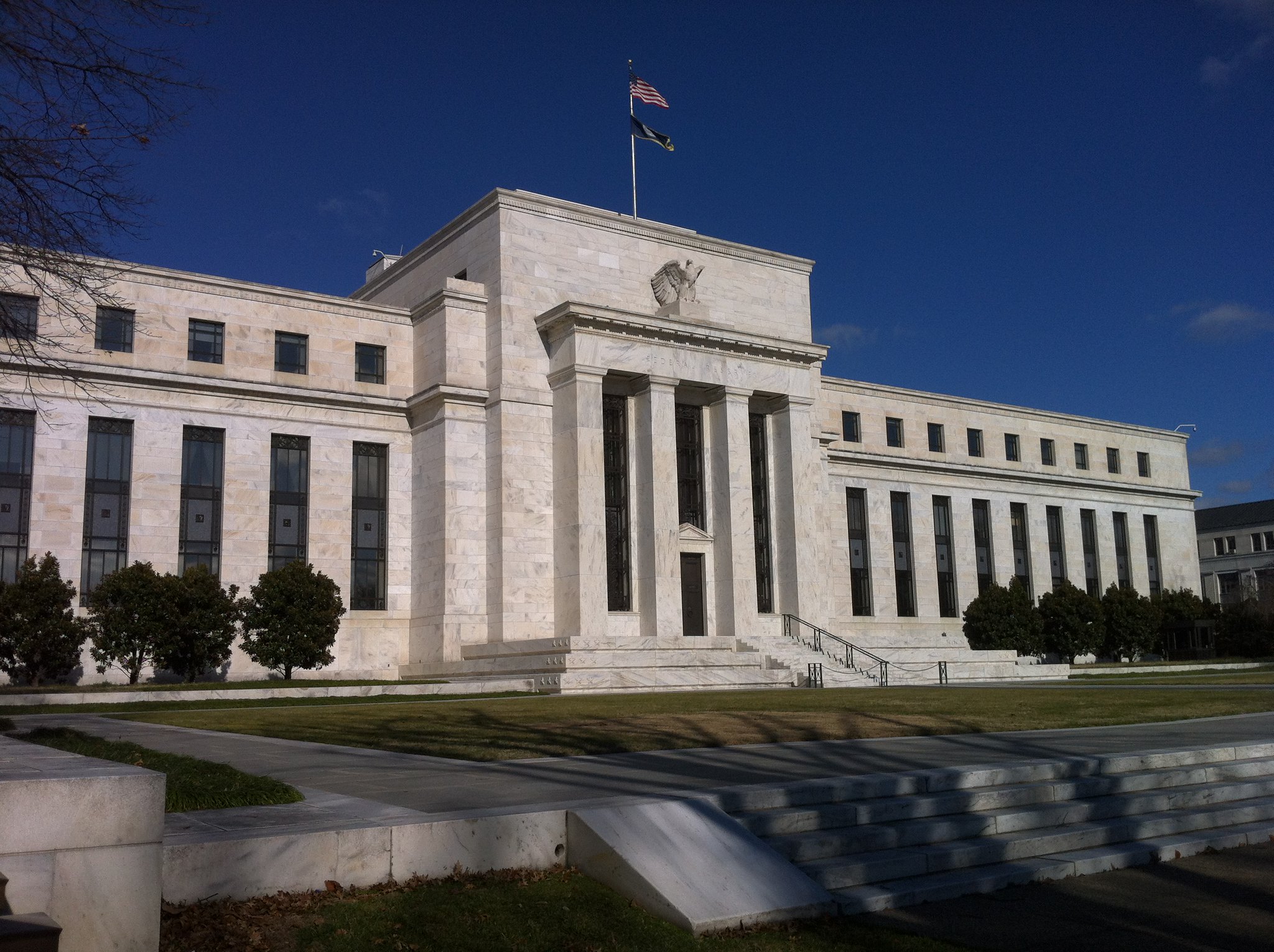
Most wealthy countries today have central banks. And most of these central banks operate discretionarily. What this means is that monetary policymakers have significant latitude to determine the course of monetary policy. Although monetary policy is crafted using sophisticated economic tools, ultimately any policy decision in a discretionary regime is a judgment call.
Defining monetary policy is nontrivial. The definition I prefer is changing the money supply to affect macroeconomic variables, such as inflation or unemployment. The trouble is, as we’ll see shortly, on this definition it is unclear that much of what central banks have done since the 2008 financial crisis qualifies as monetary policy. Another definition might be whatever central banks do to affect macroeconomic variables. This would capture recent policy innovations, but in my view—and in the view of most practicing monetary economists before the 2008 crisis—this definition is too broad. It includes policies which are not truly monetary.
From the 1980’s up through the end of the 2000’s, monetary policy in the United States was pretty straightforward. If the Federal Reserve were concerned by a looming recession, it would engage in expansionary policy. This means it would create new money and use it to purchase assets, usually short-term government bonds, in the secondary market. The investors who sold their bonds to the Fed now have credits on their bank accounts. This increases the total reserves in the banking system. The banking system responds by increasing financial intermediation: loaning out the new money. As it’s channeled into productive investments, the new money increases the demand for goods and services, which lessens the risks of recession. The result would be higher employment, but also higher inflation, as prices rise throughout the economy.
Contractionary policy worked the opposite way. The Fed would sell bonds, retiring the money it received from circulation. (This was almost always done digitally. Don’t think of destroying physical currency units; think instead of deleting balances from a bank account.) Bank reserves decrease; financial intermediation slows down. The Fed might enact contractionary policy if it were worried about overly high inflation. The slowdown in demand-side economic activity means prices would rise more slowly than before (disinflation, the usual result), or even fall (deflation, although this almost never happens in practice).
However, there’s been a big change in how the Fed conducts monetary policy since the 2008 crisis. Under the new system, the Fed does not attempt to change macroeconomic variables by changing the quantity of reserves in the banking system. Instead, the Fed has switched to using one of its administered interest rates—the rate paid on banks’ excess reserves held in their accounts at the Fed—to conduct monetary policy. The original idea behind the Fed was that it would be a quasi-clearinghouse, or bankers’ bank. It still retains some of these features. Member banks of the Federal Reserve System have their own bank accounts, which they keep at the Fed. The Fed can pay banks interest on their deposits, at the Fed’s discretion.
In the aftermath of the turmoil that ripped through markets in 2008, the Fed asked and received from Congress permission to pay interest to banks who held greater deposits at the Fed than the statutorily required minimum. By changing this administered (meaning non-market) rate, the Fed can change the incentives for banks to engage in financial intermediation. In other words, there is no longer a direct link between the total quantity of bank reserves and overall economic activity, as well as the macroeconomic variables that serve as snapshots of that activity.
Under this new system, if the Fed wants to enact expansionary policy, it lowers the rate paid on excess reserves. This reduces the incentive for banks to hold reserves at the Fed (they are getting paid less), and increases the incentive to engage in financial intermediation (other things they can do with the money have a comparatively higher payoff). Correspondingly, if the Fed wants to enact contractionary policy, it raises the rate paid on excess reserves. This increases the incentive for banks to hold reserves at the Fed (they are getting paid more), and reduces the incentive to engage in financial intermediation (other things they can do with the money have a comparatively lower payoff).
How much does this change in the Fed’s operating framework matter? As it turns out, it’s a big deal. We need to remember the Fed’s awesome power: it has a monopoly on the production of base (alternatively, narrow) money, which is the economy’s most liquid asset. It can literally create money out of thin air. Anybody at all familiar with the logic of politics can see this power lends itself to abuse. Under the old monetary policy framework, however, there were immediate costs to misusing this power. If the Fed were to succumb to politicians’ influence, running the printing presses to satisfy a political interest group, the result would quickly be higher-than-desired inflation. The Fed would be forced to scale back. Now, however, the link between expansionary monetary policy and undesirable outcomes, such as higher inflation, is much weaker. The Fed can print money, purchase whatever assets it wants, and then prevent those purchases from having undesirable macroeconomic consequences by raising interest payments on excess reserves.
What this means is that the Fed now has a much higher degree of freedom to preferentially allocate credit. We saw this process start during the 2008 crisis. Rather than act as a responsible lender of last resort, the Fed tried to support the prices of specific assets, such as the now-infamous mortgage backed securities. It also made emergency loans to politically advantaged banks, which were not justified by the fundamental solvency of those banks. The Fed continued to abuse this power in responding to Covid-19. In the more recent case, the Fed made direct loans to non-financial organizations, including small- and medium-sized businesses, large corporations, and state and local governments. Although the magnitude of these policies is not yet large—these unconventional asset purchases are still a very small fraction of the Fed’s balance sheet—a dangerous precedent has been set. In the event of market turmoil, the Fed evidently feels comfortable not only being a liquidity provider, but also a credit allocator.
In other words, the Fed has stopped engaging solely in monetary policy. It is now doing fiscal policy as well. This mandate creep should trouble everyone who cares about the rule of law. When the Fed’s monopoly prerogative on money creation is used not for benign macroeconomic purposes, but in the service of fiscal politics, the economy will atrophy. Growth will slow down as scarce credit is allocated by politics, not profit. The Fed will become a less effective agent for fighting macroeconomic downturns. Again, the problem is that the Fed’s new operating framework presents too many opportunities for elected officials and bureaucrats to meddle in affairs beyond their competence.
Now that the supply of reserves in the banking system can become arbitrarily large, it’s much easier to engage in fiscal policy masquerading as monetary policy. Charles Plosser, a respected macroeconomist and former president of the Federal Reserve Bank of Philadelphia, summarizes the problem: “Once the demand for reserves is satiated, there is no limit, in principle, to how big the [Fed’s] balance sheet or volume of reserves can be. A large balance sheet unconstrained by monetary policy is ripe for abuse. Congress and an administration would be tempted to look to the balance sheet for their own purposes, including credit policy and off-budget fiscal policy.”
This is why the definition of monetary policy matters. If monetary policy just means “whatever central banks do,” then the Fed’s activities over the past decade qualify. But if monetary policy is supposed to be liquidity-focused—if the Fed is supposed to provide markets a foundation for allocating resources, but not itself allocate those resources—then the Fed has crossed the Rubicon from monetary policy to fiscal policy. It’s supposed to be the people’s representatives, in Congress assembled, that conduct fiscal policy. The Fed engaging in this task is a major breach of established macroeconomic policy norms.
History shows we can’t trust central banks to stick to their mandates. Like all political organizations, they want to increase their power. Unfortunately, there’s no reason to think that an increasingly active central bank will better serve the public. As we’ve seen since 2008, the opposite is at least as likely. While this is true of all central banks, it is particularly evident in the case of the Fed. It is not simply that the Fed is getting worse at fighting recessions. It’s that the Fed’s operating framework systematically tends towards the abuse of life, liberty, and property. If we want to fix this, we need to take a much closer look at the relationship between money and freedom. Only if we understand this relationship, philosophically, economically, and historically, will we be in a position to fix what’s gone wrong with our monetary institutions.

Join the community.

McMaken: The Fed’s Inflation Is Behind the Supply-Chain Mess

‘White People, You Are The Problem’: AT&T’s Internal ‘Racial Reeducation Program’ Leaked

Matrix? Misdirection? Cringe? Zuckerberg’s presentation of future life in ‘metaverse’ sparks fear, loathing, marvel and mockery

New York facing streets without cops because of COVID vaccine mandate

The Establishment Is Hiding Mass Resistance To Vaccine Mandates With The “Striketober” Farce
