
Politics
“Weapons of Mass Destruction”: The Last Refuge of the Global Interventionist
If the US really wanted to reduce the likelihood of regimes like Iran and North Korea seeking and expanding nuclear capabilities, the US would disavow its doctrine of regime change explicitly.


The threat of “nuclear proliferation” remains one of the great catch-all reasons—the other being “humanitarian” intervention—given for why the US regime and its allies ought to be given unlimited power to invade foreign states and impose sanctions at any given time.
We saw this at work during the run-up to the 2003 invasion of Iraq. It was said that nuclear weapons were among the “weapons of mass destruction” being developed or harbored by Saddam Hussein’s regime. Thus, it was “necessary” that the United States invade Iraq and enact regime change.
It is now very clear, of course, that the Bush-Cheney administration was lying and there was no credible evidence that Iraq’s long-defunct nuclear program had been revived.
But let’s say for the sake of argument that Iraq was well on its way to developing a nuclear weapon in early 2003. Would it have become “necessary” for the US to invade Iraq and install a de facto puppet regime that would agree to not develop nuclear weapons?
The question is relevant, of course, because interventionists are now making the same claims about Iran as were made about Iraq in 2003.
The conventional thinking among neoconservatives and other interventionists in Washington is that yes, the United States is always justified in invading foreign states if it prevents nuclear proliferation. If this is not done, we are told, the new nuclear state will surely use its new weapons, or at least threaten to use them for purposes of blackmail.
Unfortunately for the interventionists, history has repeatedly shown this claim to be tenuous at best. Since 1945, as more and more states have become part of the “nuclear club,” each new member has failed to live up to the predictions that proliferation will quickly lead to geopolitical destabilization and war.
This has become more important in recent years, as humanitarian interventions have apparently lost their cache with the American public. In recent years, Washington has tried to drum up support for regime change invasions in both Venezuela and Syria, yet those efforts failed to catch on.
Threat of nuclear proliferation, then, likely offers the last hope for the interventionists when it comes to regime change in Iran.
Those Guys Are Crazy!
Perhaps the most-used argument made against tolerating proliferation often rests on the idea that most regimes are too insane, irrational, or incompetent to manage nuclear weapons responsibly—however one might define “responsible” stewardship of weapons that exist to destroy entire metropolitan populations.
The claim is thus made that regimes in Iran, Iraq, and North Korea—to name just three examples—are likely to be unrestrained by the instinct of self-preservation and that thus we cannot apply traditional theories of nuclear deterrence to these regimes.
Yet, this theory has yet to amass any evidence to support it. Are we to believe that the Soviet and Chinese regimes have always been headed by eminently sane people? After all, as John Mueller notes,
the weapons have proliferated to large, important countries run by unchallenged monsters who, at the time they acquired the bombs, were certifiably deranged: Josef Stalin, who in 1949 was planning to change the climate of the Soviet Union by planting a lot of trees, and Mao Zedong, who in 1964 had just carried out a bizarre social experiment that resulted in an artificial famine in which tens of millions of Chinese perished.
Mueller suggests that it is incumbent on the opponents of an Iranian bomb to show that Iran’s leaders are less sane than Stalin.
Some might nevertheless claim (however implausibly) that Muslims are somehow more naturally murderous than Stalin. Yet we might note that this doesn’t explain how the Islamic Republic of Pakistan—an occasional military dictatorship—has somehow refrained from using its nuclear arms against its hated rival India.
In actual experience, regimes that acquire a bomb tend to moderate their behavior. As Kenneth Waltz points out:
every new nuclear state has behaved exactly the way the old nuclear states have behaved. One can describe the way all nuclear states have behaved in one word: responsibly. When the United States contemplated the Soviet Union one day having its own nuclear weapons, we were horrified by the prospect. How could we live? How could the world live with such a country as the Soviet Union—which we saw as bent on world domination—having nuclear weapons? And when China developed its own nuclear weapons, we repeated the same way of thinking—“My God! China? China is crazy!”
But in fact, if you think of the Cultural Revolution, China took very good care of its nuclear weapons. They ensured that they would not fall under the hands of the revolutionaries and came through that horrible ten-year period. The fact is that people worry that a new nuclear country, once it gets a nuclear shield, would then begin to behave immoderately or irresponsibly under the cover of its own nuclear weapons. Well, that has never happened. Every country that has had nuclear weapons has behaved moderately.
(Of course, by “moderately” he only means in terms of provoking full-scale war with rivals.)
In any case, the notion that regimes that acquire nuclear warheads then go off the deep end has yet to be observed in real life.
This is why, in a 2012 forum for PBS, John Mearsheimer noted that if Iran were to acquire nuclear weapons, this would likely stabilize the region rather than destabilize it:
I think there’s no question that a nuclear-armed Iran would bring stability to the region, because nuclear weapons are weapons of peace. They’re weapons of deterrence.
And because nuclear weapons are useful only for deterring attacks, they cannot be used for so-called nuclear blackmail:
We have created this myth in this country over the past few years in talking about Iran that any country that acquires nuclear weapons can blackmail other countries or use those nuclear weapons for offensive purposes. We have a lot of theory and a huge amount of empirical evidence, 67 years now, which show that no country with nuclear weapons can blackmail another country, as long as somebody is protecting that country or it has its own nuclear weapons.
Rather, in the case of Iran, according to Waltz, if the goal is stability in the region, that answer lies in ending Israel’s nuclear monopoly in the region—which has been a source of enduring instability. In the July/August 2012 issue of Foreign Affairs, Waltz observed:
Israel’s regional nuclear monopoly, which has proved remarkably durable for the past four decades, has long fueled instability in the Middle East. In no other region of the world does a lone, unchecked nuclear state exist.
Of course, it is easy to understand why Israel wants to remain the sole nuclear power in the region and why it is willing to use force to secure that status. In 1981, Israel bombed Iraq to prevent a challenge to its nuclear monopoly. It did the same to Syria in 2007 and is now considering similar action against Iran. But the very acts that have allowed Israel to maintain its nuclear edge in the short term have prolonged an imbalance that is unsustainable in the long term. Israel’s proven ability to strike potential nuclear rivals with impunity has inevitably made its enemies anxious to develop the means to prevent Israel from doing so again. In this way, the current tensions are best viewed not as the early stages of a relatively recent Iranian nuclear crisis but rather as the final stages of a decades-long Middle East nuclear crisis that will end only when a balance of military power is restored.
Nuclear Arms Offer a Solution to Threats of Regime Change
Indeed, the case of Israel is not unique in the sense that the United States provokes the same sort of instability worldwide.
The United States has either carried out regime change or threatened to do so in a number of cases. This means those countries targeted by the US are highly motivated to acquire arms, which these regimes correctly see as the only reliable deterrent against US invasion. Waltz continues:
There is only one way that a country can reliably deter a dominant power, and that is by developing its own nuclear force. When president Bush identified the countries that he said constituted an “axis of evil”—namely, Iraq, Iran, and North Korea—and then proceeded to invade one of them—namely, Iraq—that was certainly a lesson quickly learned by both Iran and North Korea. That is to say, that if a country wants to deter the United States it has to equip itself with nuclear force. I think we all have seen that demonstrated very clearly.
In other words, it is the United States, and to a lesser extent the State of Israel, which have created situations in which states become highly motivated to acquire nuclear arms for defensive reasons.
If the US really wanted to reduce the likelihood of regimes like Iran and North Korea seeking and expanding nuclear capabilities, the US would disavow its doctrine of regime change explicitly. It would also renounce the notion of an “axis of evil” and cut back the US’s nuclear arsenal to a force designed for minimum deterrence.
Until that happens, the United States itself remains a primary motivation for nuclear armament among regimes that have run afoul of the Washington establishment.
This, however, is unlikely to happen, because a perpetual stance of antiproliferation and regime change pays many dividends in Washington. It keeps the Pentagon’s budget sky-high, and it allows the regime to claim it is enforcing worldwide peace, even while it remains a source of instability.
In the sloppy world of public debates over foreign policy, this appears to many voters to make sense. As Mueller has suggested, it’s easy to just keep pushing the panic button and then taking the credit for the fact that World War III has yet to break out:
Alarmists have one great advantage. If their alarm proves to be justified, they will look like prophets. If nothing happens, they can claim that this desirable condition has been the result of efforts their alarmism has inspired. Thus, when New York Police Department Commissioner David Cohen is asked how he knows whether his extensive counterterrorism programs (which have had an almost perfect record of not finding any terrorists) have been successful, he curtly responds, “They haven’t attacked us.” Reporting this comment, reporters Matt Apuzzo and Adam Goldman note that “the absence of a terrorist attack has been the silver‐bullet argument for national security pro‐fessionals.” Although it is a “flawed argument” logically, they continue, it has been “nearly irrefutable” politically. The dodge, then, is, (1) we are trying to keep them from attacking; (2) they haven’t attacked; therefore (3) it must be our efforts that have kept them from doing so.
The question we must ask ourselves, however, is: At what cost?
How many more countries will the United States bomb or invade in the name of wiping out weapons of mass destruction? We’ve already seen the side effects of these efforts. Not only are hundreds of thousands of human beings killed in these wars—as was the case in Iraq—but these conflicts also create immense refugee and immigration crises while creating power vacuums. ISIS, for example, would have never gained much success at all had the US not destroyed Saddam’s secularist Ba’athist regime in Iraq.
These costs are sure to be studiously ignored. Whether we’re talking about global warming or covid-19, or “weapons of mass destruction,” the strategy today is that we must trust the regime to take whatever drastic steps it wishes or else we face an existential threat. We must adopt environmental regulations that would force billions of Africans and Asians back into poverty “or else.” We must destroy civil liberties and impose lockdowns on countless millions “or else.” We must carry out regime change in yet another country “or else.”
This narrative has worked wonders for regimes seeking ever more power. They won’t abandon this strategy any time soon.


Politics
Biden Wants To Give Separated Illegal Immigrants $450,000 Per Person
The average amount sought through the courts is roughly $3.4 million per family, according to the report.
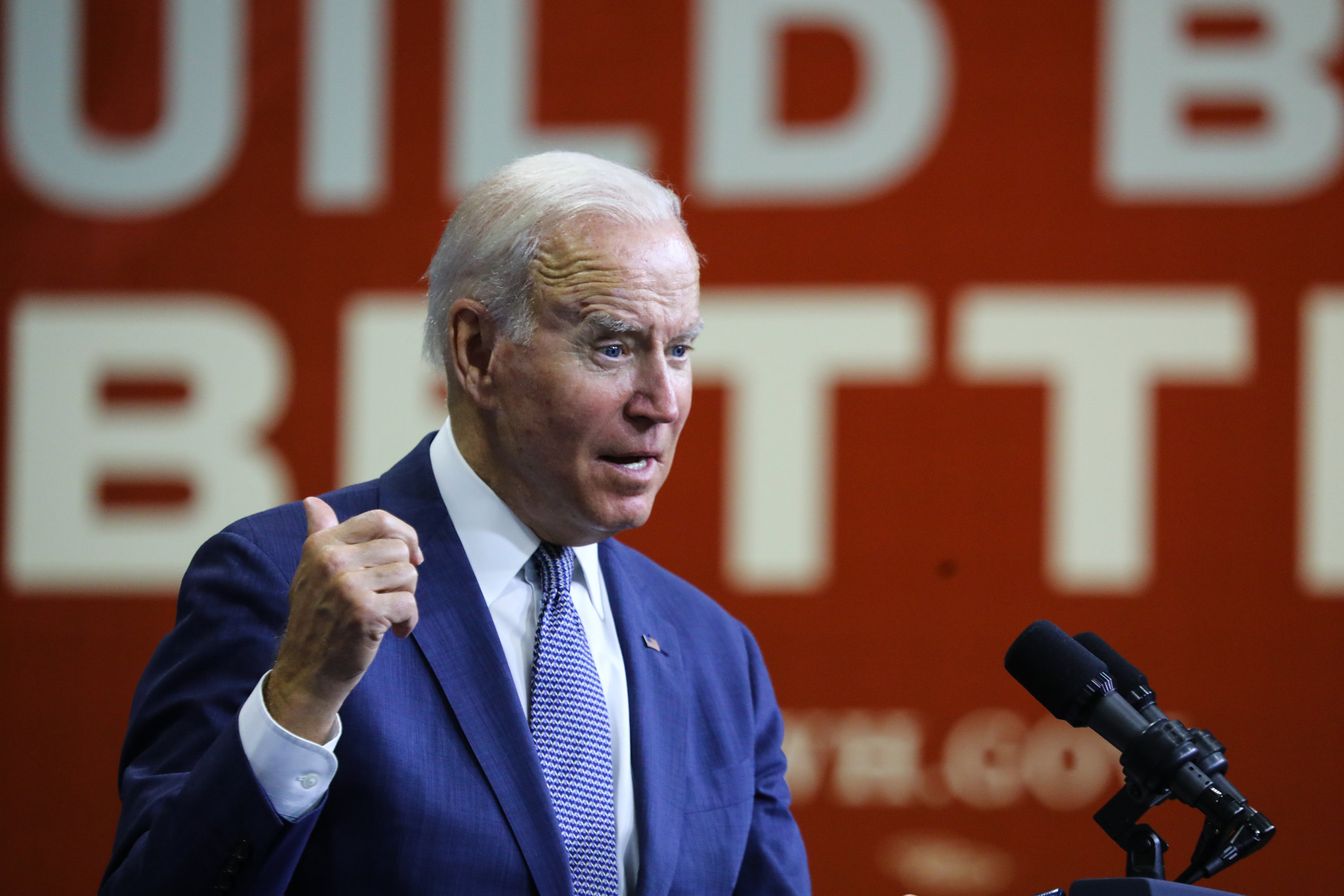
The Biden administration is mulling a plan to offer immigrant families separated during the Trump administration $450,000 per person in compensation, according to the Wall Street Journal, citing people familiar with the matter.
The payments – part of an inter-agency solution to several lawsuits filed on behalf of separated parents and children claiming lasting psychological trauma could amount to nearly $1 million per family, though ‘the final numbers could shift,’ according to the report.
According to sources, most of the families crossing into the US from Mexico included one parent and one child. Depending on circumstances, many families could get smaller payouts.
The American Civil Liberties Union, which represents families in one of the lawsuits, has identified about 5,500 children separated at the border over the course of the Trump administration, citing figures provided to it by the government. The number of families eligible under the potential settlement is expected to be smaller, the people said, as government officials aren’t sure how many will come forward. Around 940 claims have so far been filed by the families, the people said. -WSJ
In total, the potential payout could reach $1 billion or more.
Throughout the Trump administration, thousands of children were separated from their parents (and coyotes paid to bring them into the country) after they had crossed illegally into the country from Mexico. The lawsuits allege some of the children suffered various ailments – including malnutrition, heat exhaustion, and were kept in freezing cold rooms with little medical attention. Some claim lasting mental health problems due to the trauma of being without their parents for several months.
The average amount sought through the courts is roughly $3.4 million per family, according to the report.
“President Biden has agreed that the family separation policy is a historic moral stain on our nation that must be fully remedied,” said ACLU deputy director, Lee Gelernt. “That remedy must include not only meaningful monetary compensation, but a pathway to remain in the country.”
Senate Republicans slammed the plan on Thursday afternoon following the WSJ‘s report.
“The Biden administration’s promises of citizenship and entitlement programs have already caused the worst border crisis in history—a huge cash reward will make it even worse,” said Sen. Tom Cotton (R-AR).
The discussions about the payouts have taken place over the past few months among a group of dozens of private lawyers representing the families and government lawyers. Some government lawyers have viewed the payouts as excessive for people who had violated the law by crossing the border, the people said. One government lawyer threatened to remove his name from the case out of disagreement with the potential settlement offer, the people said. -WSJ
“It is a complicated, complex piece of litigation” – trying to resolve hundreds of separate lawsuits at the same time, and “sometimes even more complex to try the cases” said Margo Schlanger, who ran the civil-rights office during the Obama administration at the Department of Homeland Security and now teaches at the University of Michigan law school.
What will the reparations crowd think of this?
Politics
White House To America: ‘We’re Coming Door To Door…With Shots!’
Will CDC soon recommend a nation-wide re-count of Covid deaths?

White House spokesperson Jen Psaki said at the daily press conference yesterday that President Biden’s strategy to get everyone a Covid shot – whether they want it or not – is to start going “door-to-door” to those not yet jabbed. So…they have a list? Also today: bomb-maker Raytheon goes “woke.” Capitol Hill Cops set up shop in California. Will CDC soon recommend a nation-wide re-count of Covid deaths?
Politics
Half A Million Illegals Crossed Since Harris Named Border ‘Czar’
By the time June’s figures are reported in the coming days, the combined number is expected to be over half a million, more than the entire population of Miami, Florida or Cleveland, Ohio.
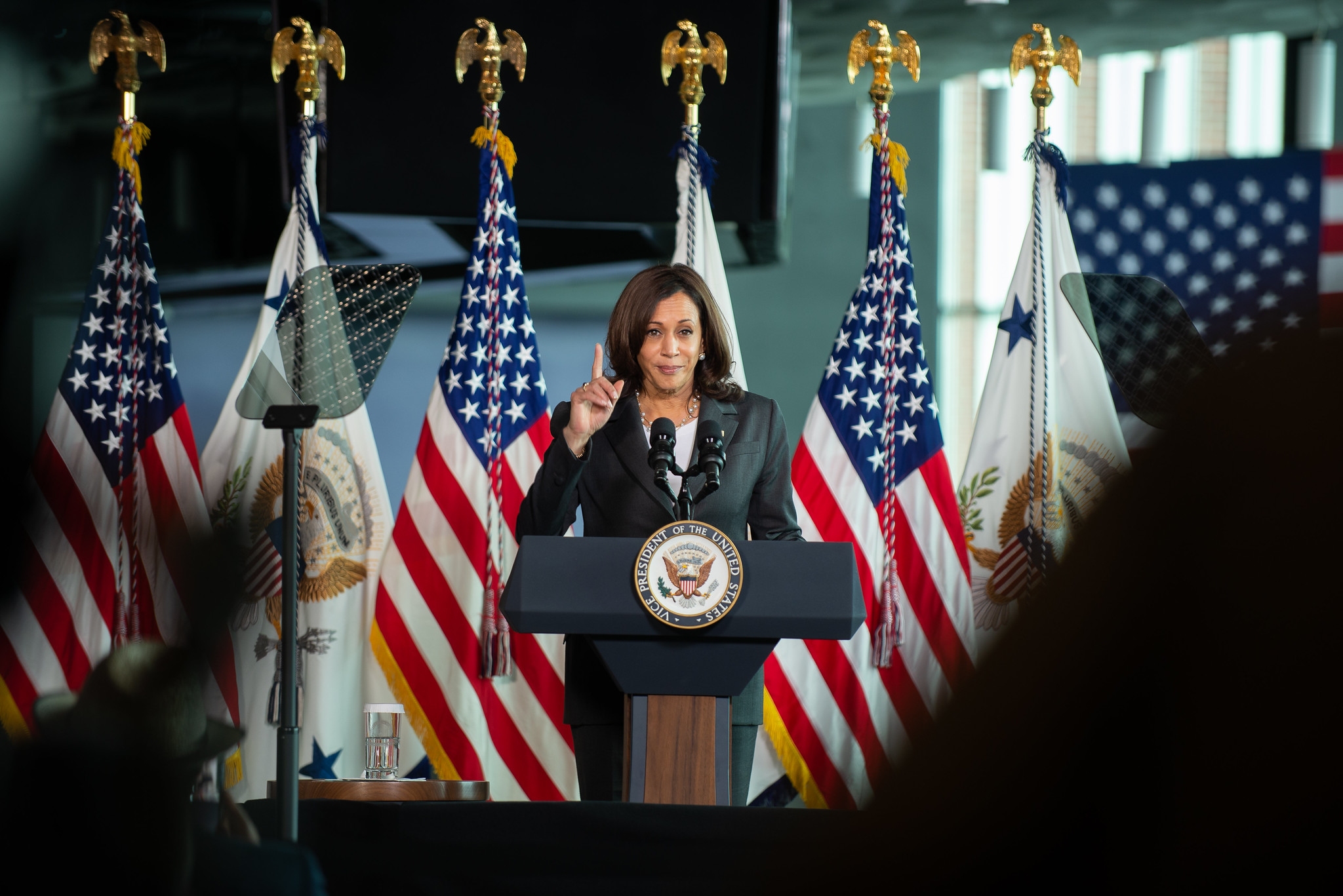
According to U.S. Customs and Border Protection figures, around 500,000 illegal immigrants have crossed the southern border since Kamala Harris was named border ‘czar’.
The Washington Free Beacon reported the findings, noting that only three months has passed since Harris took on the responsibility, and that the half a million figure is just those that have been apprehended.
The CBP says around 180,000 immigrants are being caught per month. In April agents arrested 178,854 illegal immigrants, the highest monthly figure for 21 years. That figure was then surpassed in May as agents apprehended 180,034 illegals.
By the time June’s figures are reported in the coming days, the combined number is expected to be over half a million, more than the entire population of Miami, Florida or Cleveland, Ohio.
Harris only bothered to visit the border when President Trump announced he was making a trip. Even then Harris visited El Paso, some 1000 miles away from where the crisis is taking place.
Previous to this, Harris lied and claimed she had been to the border, telling NBC’s Lester Holt “This whole thing about the border. We’ve been to the border. We’ve been to the border.”
When Holt pushed back and said she had not, Harris snapped “I—and I haven’t been to Europe. And I mean, I don’t—I don’t understand the point that you’re making,” then again laughed maniacally:
On Tuesday, Republican Senator Ron Johnson argued that Harris’ trip to El Paso was designed to distract the media and keep them away from the real crisis hit areas of the border.
“They took her to a point in the border where she wouldn’t see the crisis and so the press wouldn’t report on the crisis,” Johnson said.
The Senator added, “You just simply can’t understand what this administration is doing. We literally are apprehending now about 6,000 people per day. That’s I mean, that’s a large caravan every day being processed, some of them being returned, others are being dispersed. But this crisis is not going away. It’s just under everybody’s radar because the press isn’t covering it.”

Join the community.

McMaken: The Fed’s Inflation Is Behind the Supply-Chain Mess

‘White People, You Are The Problem’: AT&T’s Internal ‘Racial Reeducation Program’ Leaked

Matrix? Misdirection? Cringe? Zuckerberg’s presentation of future life in ‘metaverse’ sparks fear, loathing, marvel and mockery

New York facing streets without cops because of COVID vaccine mandate

The Establishment Is Hiding Mass Resistance To Vaccine Mandates With The “Striketober” Farce
