
World News
The US Claims Iran Has Secret Chemical Weapons Program and Adds Sanctions
“The United States will continue to counter any efforts by the Iranian regime to develop chemical weapons,” Treasury Secretary Steven Mnuchin said in a statement.

Penned by Dave Decamp at Antiwar
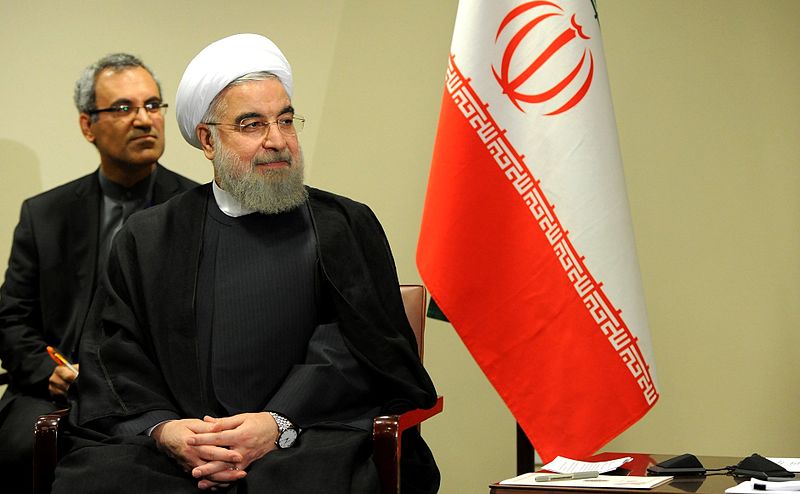
The US slapped more sanctions on Iran on Thursday, claiming that Tehran is operating a secret chemical weapons program despite a lack of evidence and Iran’s staunch opposition to chemical warfare.
The Treasury Department announced that the Shahid Meisami Group and its director had been added to the US sanctions list over alleged links to chemical weapons research. “The United States will continue to counter any efforts by the Iranian regime to develop chemical weapons,” Treasury Secretary Steven Mnuchin said in a statement.
Many Iranians were victims of chemical weapons attacks during the Iran-Iraq war that lasted from 1980 to 1988. The US supported Saddam Hussein in the war while being aware that he was using chemical weapons.
CIA documents that were declassified in 2013 revealed that in 1988, the US shared intelligence with Hussein to show the location of Iranian troops, knowing he would use lethal gas against them. The documents revealed the US had firm evidence Hussein was using chemical weapons as early as 1983.
A 1994 congressional inquiry found that US companies shipped anthrax and dozens of other biological agents that could be used to make chemical weapons to Iraq during the war.
Chemical weapons killed an estimated 20,000 Iranians during the war, and 100,000 Iranians survived the attacks. Many are still suffering from symptoms today. Since coronavirus hit Iran, veterans of the war with respiratory illnesses related to chemical weapons have been especially susceptible to the disease.
Despite Iraq’s use of chemical weapons against Iran’s soldiers and civilians, the Iranians never chose to use the internationally banned weapons due to the first supreme leader’s fatwa against them. In 2014, journalist Gareth Porter spoke with Mohsen Rafighdoost, who served as minister of the Islamic Revolutionary Guard Corps throughout the Iran-Iraq war.
Rafighdoost said he proposed to Ayatollah Ruhollah Khomeini that Iran should begin developing both chemical and nuclear weapons. Rafighdoost was told in two seperate meetings that weapons of mass destruction went against Islam, a view the current supreme leader, Ayatollah Ali Khamenei, has also expressed.


World News
The CEO Of Blackstone Is Warning That “A Real Shortage Of Energy” Will Cause Social Unrest All Over The Planet
And as energy prices escalate, that will push all prices throughout our economic system higher and higher and higher.

We are facing an unprecedented global energy crunch. Demand for energy is continually rising, and the production of energy is not keeping pace. One of the biggest reasons for this is that large financial institutions have become extremely hesitant to fund any new energy projects that will add more carbon emissions to the environment. Instead, they want to fund projects that will help us transition to the new “green economy”, but meanwhile we are getting to a point where we will soon see widespread shortages of traditional forms of energy. So now we all get to suffer. A lack of oil is pushing the price of gasoline to alarming heights, shortages of natural gas are already causing tremendous disruptions in Asia and Europe, we are being told that we are facing a propane “armageddon” this winter, and supplies of coal have dropped to dangerously low levels around the world.
In other words, we are potentially heading into the most painful global energy crisis in modern history.
When CNN asked Blackstone CEO Stephen Schwarzman about this, he openly admitted that we are “going to end up with a real shortage of energy”…
Blackstone CEO Stephen Schwarzman warned Tuesday that high energy prices will likely set off social unrest around the world.
“We’re going to end up with a real shortage of energy. And when you have a shortage, it’s going to cost more. And it’s probably going to cost a lot more,” the private-equity billionaire told CNN International’s Richard Quest at a conference in Saudi Arabia.
When the power goes out, people are not going to be happy.
And people are really not going to be happy if it goes out for an extended period of time.
According to Schwarzman, we will soon see “very unhappy people” all over the globe…
“You’re going to get very unhappy people around the world in the emerging markets in particular but in the developed world,” Schwarzman said at the Future Investment Initiative. “What happens then, Richard, is you’ve got real unrest. This challenges the political system and it’s all utterly unnecessary.”
Sadly, he is right that this global energy crisis did not have to happen.
If the global elite had continued to fund traditional energy projects at the pace that was needed, we could have avoided this nightmare to a very large degree.
But traditional forms of energy are now being shunned, and billions of people will suffer as a result.
Meanwhile, prices throughout our economic system continue to rise at a very alarming pace. Just check out what has been happening to the price of turkey…
The U.S. Department of Agriculture, for example, released data recently showing the average wholesale price of Grade A frozen 8- to 16-pound turkey has spiked by 21.91% since last year. That means what cost $1.15 per pound a year ago will now ring at at $1.41. And just for context, the same would have cost 96 cents in 2019 and 84 cents in 2018.
If math isn’t your thing, that’s a 68% wholesale price increase in just two years.
Overall, we are being told that this upcoming Thanksgiving will be the most expensive Thanksgiving that any of us have ever experienced…
Matthew McClure paid 20% more this month than he did last year for the 25 pasture-raised turkeys he plans to roast at the Hive, the Bentonville, Arkansas, restaurant where he is the executive chef. And Norman Brown, director of sweet-potato sales for Wada Farms in Raleigh, North Carolina, is paying truckers nearly twice as much as usual to haul the crop to other parts of the country.
“I never seen anything like it, and I’ve been running sweet potatoes for 38 or 39 years,” Brown said. “I don’t know what the answer is, but in the end it’s all going to get passed on to the consumer.”
Unfortunately, more price hikes are on the horizon.
In fact, Kimberly-Clark is opening warning that they are going to be boosting prices even higher…
Prices of toilet paper, diapers, facial tissues and paper towels will likely rise in coming weeks as Irving-based consumer giant Kimberly-Clark warned Monday that inflation and supply chain concerns aren’t “likely to be resolved quickly.”
So I would stock up on paper products while you still can.
In case you haven’t figured it out yet, inflation is eventually going to get far worse than what we witnessed during the 1970s.
At this point, even many top Democrats are warning that high inflation is with us to stay. Here is one recent example…
Former President Barack Obama’s chief of global development on Tuesday predicted inflation was here to stay, despite the Biden administration’s protestations to the contrary.
Prices “will go higher, and the Fed has misread the inflation dynamics in a big way,” former Global Development Council Chairman Mohamed El Erian said in an afternoon interview with Fox News’ Sandra Smith, adding that the Federal Reserve was “still hostage to this notion that it’s transitory.”
And the shortages that we are currently experiencing are ultimately going to get worse too.
Right now, we are already facing the worst shortage of alcoholic beverages since the 1930s. When asked about his empty shelves by a reporter, one gas station owner said that he has “never seen anything like this”…
Supply chain issues are impacting the alcohol supply in the U.S., and it’s making alcohol more expensive and difficult for bars and liquor stores to get.
“I have so many empty shelves. In the two years of doing this, I’ve never seen anything like this,” gas station chain owner Ali Ali said.
As I discussed yesterday, now Biden wants to take countless more truck drivers off the road, and that will make our supply chain headaches a whole lot worse.
And as energy prices escalate, that will push all prices throughout our economic system higher and higher and higher.
Yes, all of this is really happening.
This is not a drill.
We are in the early chapters of a full-blown economic meltdown of epic proportions, and nothing will ever be the same after this.
If you want to keep waiting for conditions to “return to normal”, you are going to be waiting for a really, really long time.
We have entered a truly horrible nightmare, and there will be no waking up from this.
World News
Georgian Protesters Storm LGBT Office, Tear Down Pride Flags And Replace Them With National Flag
Will Biden target them with drone strikes in order to spread “our values?”

Georgian protesters on Monday forced the cancellation of an LGBT pride march after storming the office of an LGBT lobby group, tearing down their pride flags and replacing them with Georgia’s national flag.
This is what anti-imperialism looks like:
#Georgia 🇬🇪: a man on a scooter reportedly tried to drive into a group of journalists as they were reporting on the anti-pride violence in #Tbilisi.
— Thomas van Linge (@ThomasVLinge) July 5, 2021
Source: https://t.co/SpUIIzAzRa pic.twitter.com/HSffPvAoVL
From Reuters, “LGBT+ campaigners in Georgia call off pride match after office attack”:
LGBT+ campaigners in Georgia called off plans to stage a pride march on Monday after violent groups opposed to the event stormed and ransacked their office in the capital Tbilisi and targeted activists and journalists.
Activists launched five days of LGBT+ Pride celebrations last Thursday and had planned a “March for Dignity” on Monday in central Tbilisi, shrugging off criticism from the church and conservatives who said the event had no place in Georgia.
[…] Video footage posted by LGBT+ activists showed their opponents scaling their building to reach their balcony where they tore down rainbow flags and were seen entering the office of Tbilisi Pride.
[…] Campaigners said some of their equipment had been broken in the attack and that they had been forced to cancel.
Will Biden target them with drone strikes in order to spread “our values?”
World News
Pfizer vaccine losing effectiveness amid Delta variant surge, Israeli Health Ministry says as it mulls 3rd shot & new restrictions
In addition to booster shots, health officials are also mulling whether to revive some pandemic restrictions.

Pfizer’s coronavirus vaccine has dropped to 64% effectiveness in preventing infection amid the spread of the Delta variant in Israel, the Health Ministry said, as officials consider the need for booster shots and new restrictions.
The vaccine fell to 64% effectiveness in preventing symptomatic infection over the last month, the Health Ministry reported on Monday, noting that the decrease coincided with the rapid spread of the more contagious Delta variant across Israel. However, health officials said the Pfizer shot still offers strong protection against severe illness and hospitalization, reporting 93% efficacy.
While the ministry did not give the previous figures in its statement, a report published in May said the Pfizer vaccine was 97% effective against severe illness after two doses. In March, private Israeli researchers also found the immunization to be 91.2% effective against any level of symptomatic infection.
The new data comes amid a small surge across Israel, where the number of active cases hit 2,766 on Monday after 369 new infections, with the Delta variant believed to make up more than 90% of the overall total. As of July 4, around 70 patients were hospitalized, half of them in serious condition, compared to 21 with severe illness on June 19.
The fast spread of the Delta variant, which was first observed in India, has prompted Health Minister Nitzan Horowtiz to order two medical studies looking at the need for a third vaccine dose, saying they would provide “vital information” to policymakers. Prime Minister Naftali Bennett’s office added that the studies will “evaluate the efficacy of the vaccine and the rate at which it wears off over time.”
While nearly 60% of Israel’s population of 9.3 million have received at least one dose of the Pfizer vaccine – helping to bring daily infections down from their peak of around 10,000 in January – cases are still cropping up among the immunized. Last Friday, more than half of the new infections reported were in patients that had been vaccinated, according to Ynet, underscoring the need for further study.
In addition to booster shots, health officials are also mulling whether to revive some pandemic restrictions, most of which were lifted in March, as well as bringing back some version of its coronavirus ‘passport’ system, the Jerusalem Post reported. An indoor mask mandate had previously been dropped, but was brought back in late June as daily cases began to accelerate.
Foreign travelers could also face additional testing and quarantine protocols in the coming weeks, though the Health Ministry has yet to make a decision.

Join the community.

McMaken: The Fed’s Inflation Is Behind the Supply-Chain Mess

‘White People, You Are The Problem’: AT&T’s Internal ‘Racial Reeducation Program’ Leaked

Matrix? Misdirection? Cringe? Zuckerberg’s presentation of future life in ‘metaverse’ sparks fear, loathing, marvel and mockery

New York facing streets without cops because of COVID vaccine mandate

The Establishment Is Hiding Mass Resistance To Vaccine Mandates With The “Striketober” Farce
