
Uncategorized
Microsoft helping create COVID-19 vaccination ‘passport’
As businesses, airlines, countries consider making shots mandatory.

Microsoft is part of a coalition of technology and health organizations working on the development of a digital COVID-19 vaccination passport that could be used by businesses and countries to enforce mandatory innoculation.
Announced Thursday, the Vaccination Credential Initiative aims to enable people to “demonstrate their health status to safely return to travel, work, school and life while protecting their data privacy,” the Financial Times reported.
Oracle and the Mayo Clinic also are part of the coalition, which is working with technology created by The Commons Project in partnership with the Rockefeller Foundation.
People who have been vaccinated for the coronavirus currently receive a piece of paper to document their vaccination, Paul Meyer, the chief executive of The Commons Project, told the Financial Times.


Uncategorized
Mayor de Blasio Tells NYPD to Pay People Home Visits For “Hurtful” Comments
What could possibly go wrong?
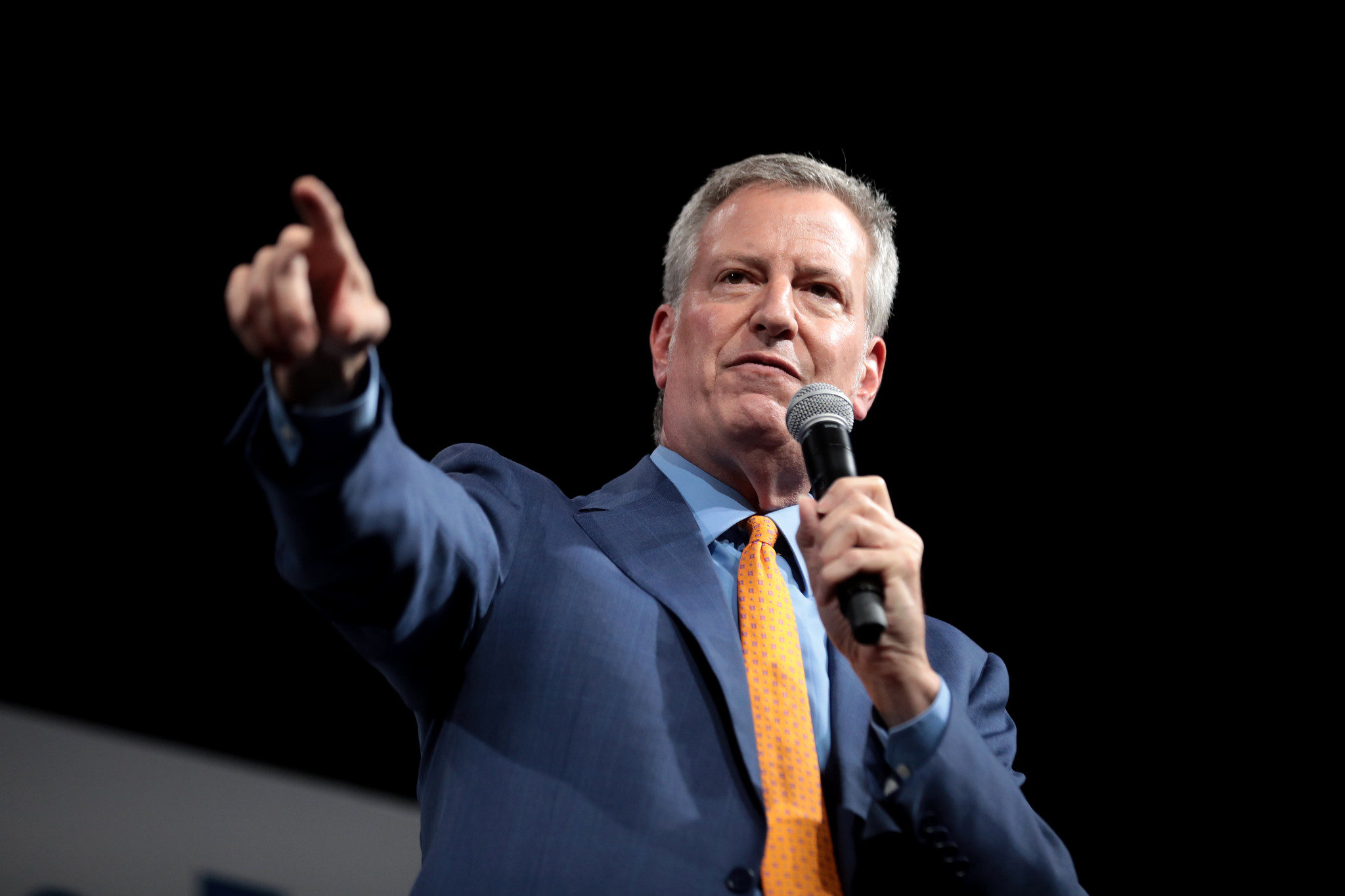
New York Mayor Bill de Blasio says NYPD officers should pay people home visits if they engage in “hurtful” behavior to others even if the action isn’t criminal.
What could possibly go wrong?
“Even if something is not a criminal case, a perpetrator being confronted by the city, whether it’s NYPD or another agency, and being told that what they’ve done was very hurtful to another person — and could, if ever repeated, lead to criminal charges — that’s another important piece of the puzzle,” de Blasio told reporters.
The Mayor failed to define precisely what he meant by “hurtful,” but since he framed it in the context of non-criminal behavior, he can only be referring to mean words.
De Blasio urged officers to “confront” people to tell them their behavior is “not appropriate,” urging alleged victims to make more reports to authorities.
He then even suggested that cops, instead of responding to actual crimes, should visit New Yorker’s homes to police their speech.
“I assure you, if an NYPD officer calls you or shows up at your door to ask you about something you did, it makes people think twice,” he said. “We need that.”
De Blasio made the comments in light of yet another contrived moral panic, this time over an alleged rise in “hate crime” towards Asians.
The narrative was bolstered after a gunman slaughtered eight people — including six Asian women — at massage parlors across Atlanta, Georgia.
The media has either glossed over or outright ignored the fact that two white victims also lost their lives and that the attack was motivated by the killer’s sex obsession and had nothing whatsoever to do with race.
Uncategorized
Government Stimulus Is Blowing Up a Massive Economic Bubble
How can millions of Americans be out of work while simultaneously on a spending binge?

We’re told we’re on the road to economic recovery. The $1.9 trillion stimulus is all we need to get us over the hump. But the truth is, Americans started spending like they were over the hump months ago. In fact, American consumers high on stimulus have been on a spending spree since last summer. The Federal Reserve printed money. Uncle Sam handed it out. American consumers spent it on imported goods.
This isn’t the formula for a genuine economy. It’s the formula for a giant bubble.
During the Great Recession, consumers cut spending. This is what you generally expect during an economic downturn. The economy contracts, people lose jobs, money gets tight and consumers spend less. You can see this in the numbers. Spending on durable goods plunged by 19% from the peak in October 2007 to the trough in April 2009. Meanwhile, spending on nondurable goods (food and gasoline) dropped by 10% during the Financial Crisis, from the peak in July 2008 to the trough in March 2009.
This spending cutback during an economic downturn creates what economists call “pent-up demand.” This helps drive spending upward during an economic recovery. You can see how the pent-up demand drove spending on durable goods post-recession in this graph produced by WolfStreet.
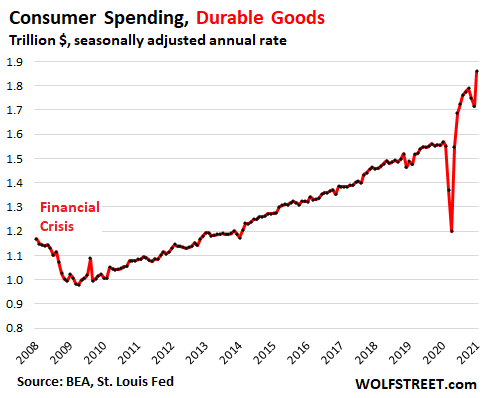
You can also see that consumer spending during the pandemic downturn took an entirely different trajectory. After a sharp but brief drop in the first months of the pandemic, spending surged.
In January alone, spending on durable goods spiked by 18.6% from a year ago, according to the Bureau of Economic Analysis. You might think this was the result of the mythical economic recovery as states loosen lockdown restrictions, but this spending spree has been going on since last June.
How can this be? How can millions of Americans be out of work while simultaneously on a spending binge?
The government has been handing out money, that’s how.
And Americans have dutifully spent it. WolfStreet sums it up this way:
Give Americans some free money, and tell them it’s their duty to buy some stuff with it, preferable stuff imported from other countries, and they’ll buy some stuff with it, big and expensive stuff too, and they did buy a lot of stuff with it, more than they’d ever bought before, and their homes are full of stuff they bought in this eight-month-long record rollicking free-money spending spree.”
Even with millions out of work, incomes in the US have risen during the pandemic – and a lot of that income came from Uncle Sam’s handouts. Income from wages and salaries in January came in at $9.7 trillion, a modest 1.1% year-on-year increase. But income from unemployment benefits, stimulus checks, and other government support payments exploded to $2.9 trillion. According to WolfStreet, “along with income from interest, dividends, rental properties, farm income, income from Social Security and other transfer payments, total income in January, all together, jumped by 13% from a year ago to a record $21.5 trillion (seasonally adjusted annual rate).”
On top of that, a lot of Americans had money freed up because they didn’t have to pay rent or mortgages, or make student loan payments. According to the Mortgage Bankers Association, 4.3 million mortgages were in forbearance at the height of the pandemic. Currently, 2.6 million mortgages remain in forbearance.
Give people lots of free money and they’ll spend it. As WolfStreet put it, demand wasn’t pent up during the pandemic, it was let out.
This time around, households didn’t go through two years of cutting back on goods purchases, as they’d done during the Financial Crisis.
This time around, there is a shortage of supply, including the now infamous semiconductor shortage, due to the surge in spending on goods, and inventories are tight, amid production snags and supply-chain problems. And given this demand, and the supply issues, prices of goods are rising.
Consumers have been awash with this money they didn’t need to work for. And they paid down credit card debts with it. And they spent part of it on goods.
Now another stimulus package with more free money is being prepared in Congress. If it passes, more free money will rain on consumers over the next two or three months.
This raises another question: if millions of Americans were not working but kept spending, who made all of the stuff that they bought?
That’s pretty clear from the numbers too. And it doesn’t exactly scream “booming US economy.”
The merchandise trade deficit is at a record level. In a nutshell, Americans are spending their printed money on imported goods. Peter Schiff summed up the US economy in a recent podcast.
We’re making so little that we’re importing a record amount of stuff. The world is basically, single-handedly supporting our economy by providing us with all of this stuff. How is it that we’re getting all this stuff? Are we making a lot of stuff and trading it for that stuff? No! We’re not making any stuff. The merchandise trade deficit is skyrocketing. We’re printing all this money and the Federal Reserve gives it out to Americans who aren’t productive, many of them who don’t even have jobs, but many Americans who do have jobs are in the service sector, so they’re not producing anything that they can trade, but they’re still using that money to buy the stuff other people that are living in actual viable economies, stronger economies that are saving and producing, and we’re buying all of that stuff with all the money that we’re printing. Meanwhile, we’re deluding ourselves into thinking that what we have here is a genuine economy. What we actually have is a genuine bubble.”
The problem with bubbles is they always pop.
Uncategorized
Xi Alerts Military “Be Prepared To Respond” In Current “Unstable & Uncertain” Situation
“We are facing mounting tasks in national defense… and we must comprehensively improve military training and preparedness …”
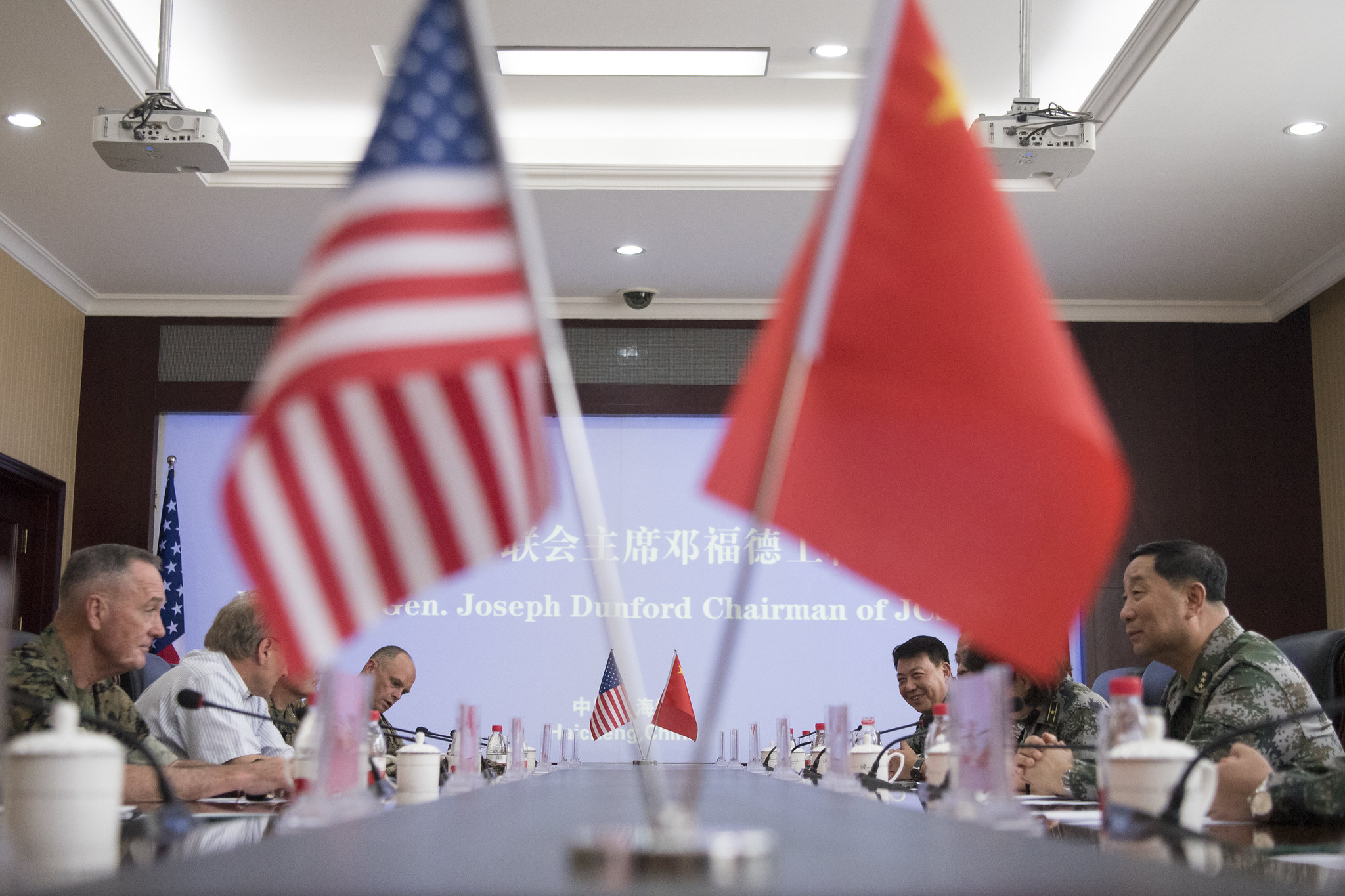
During the major annual legislative session in Beijing on Tuesday President Xi Jinping addressed top leaders of the People’s Liberation Army (PLA), telling the military it must be “prepared to respond” in increasingly difficult and complex security challenges facing the nation.
“The current security situation of our country is largely unstable and uncertain,” Xi said in the address which comes two days after Chinese Foreign Minister Wang Yi gave his own fiery warning to the same assembly saying the US is “crossing lines” and “playing with fire” on Chinese sovereignty over Taiwan.
President Xi continued: “The entire military must coordinate the relationship between capacity building and combat readiness, be prepared to respond to a variety of complex and difficult situations at any time, resolutely safeguard national sovereignty, security and development interests, and provide strong support for the comprehensive construction of a modern socialist state,” according to the South China Morning Post.
Xi, who also serves as head of the Central Military Commission further affirmed the need for “high-level strategic deterrence and a joint combat system” and rapid defense tech innovation
His words were in agreement with the assessment of Defense Minister General Wei Fenghe who on Saturday once again urged a boost in combat readiness across the armed forces, saying that national security had “entered a high-risk phase”.
“We are facing mounting tasks in national defense… and we must comprehensively improve military training and preparedness for battle so as to increase our strategic capabilities to prevail over our strong enemies,” the nation’s top general said.
A particular example that’s been front and center at the ongoing meetings are recent US and Western allied naval maneuvers in an near China-claimed waters. In the China FM’s comments, Wang pointed out, “The US and other Western countries frequently stir up troubles in the region, trying to drive a wedge using the South China Sea issue. They have only one purpose: to sabotage peace and disturb regional stability,” Wang said.
His remarks in particular emphasized a warlike tone of battling “hegemony, high-handedness and bullying” from the United Sates and its allies, and “outright interference in China’s domestic affairs” in places like Hong Kong and Taiwan.

Join the community.

McMaken: The Fed’s Inflation Is Behind the Supply-Chain Mess

‘White People, You Are The Problem’: AT&T’s Internal ‘Racial Reeducation Program’ Leaked

Matrix? Misdirection? Cringe? Zuckerberg’s presentation of future life in ‘metaverse’ sparks fear, loathing, marvel and mockery

New York facing streets without cops because of COVID vaccine mandate

The Establishment Is Hiding Mass Resistance To Vaccine Mandates With The “Striketober” Farce
