
Science & Technology
Merck Partners With Drone Startup Volansi For Vaccine Delivery
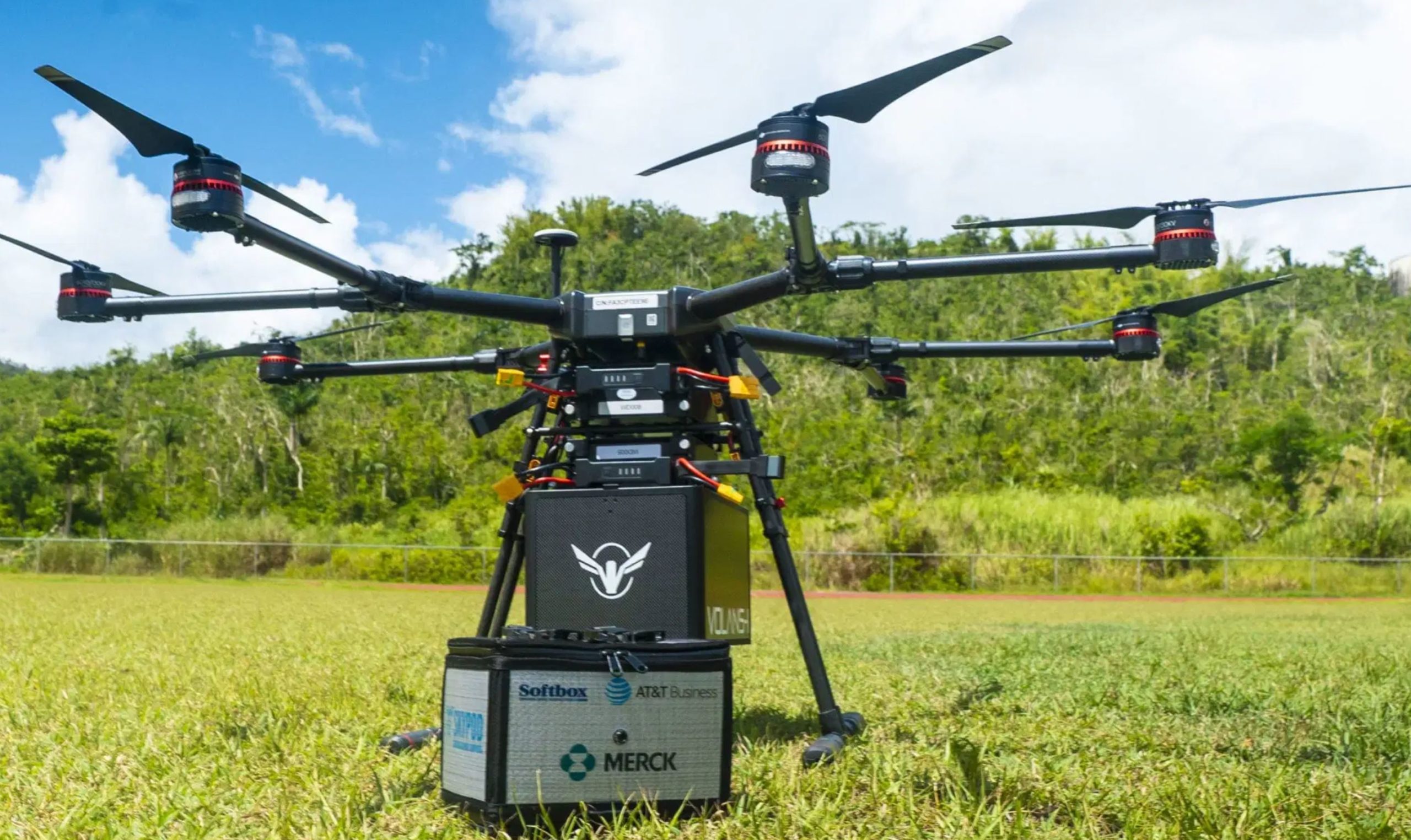
It has a 10-pound payload capacity and can cover a 50-mile radius on a single trip.

Penned by Aaron Kesel at Activist Post
Volansi has partnered with Big Pharma Merck to launch a test program in rural North Carolina to examine their ability to deliver temperature-controlled vaccines from a central production facility to determine how far they can send them, Cheddar reported.
“Once vaccines are developed and are out there, distribution will be a key challenge,” CEO Hannan Parvizian told Cheddar. “We truly believe that autonomous aerial deliveries will enable access to all areas, both in high-infrastructure countries like here in the U.S. and also in other low-infrastructure countries in emerging markets like Africa and other places in the world.”
The drone is limited at sending packages that weigh 10-pounds, but the company says it can cover at least 50 miles in just a single run.
It has a 10-pound payload capacity and can cover a 50-mile radius on a single trip,” Parvizian said. “That allows us to carry not only a significant amount of payload but also the cargo box that is required to maintain the temperature of the payload throughout the mission.”
“That’s how we will be ramping up, starting out with more rural areas and eventually moving into much more densely populated areas,” Parvizian said.
Parvizian added that the drones are able to deliver around 80 percent of all drugs and medical supplies, including blood donations.
There are probably some specialty items that are heavier or require much more care or not compatible with this type of delivery, but right now we’re not seeing any sort of big limitations on the types of payloads we can transport,” he said.
Parvizian further said Volansi differs from its competitors in that all drones use vertical take-off and landing as opposed to a catapult launcher.
“That means we don’t require any sort of ground infrastructure for launch and recovery of our vehicles,” he said.
Pay no attention to automation taking yet another job from you humans. At this point it’s beating a dead horse, but Activist Post has warned you how automation would increase due to the ongoing pandemic.
A recent report by A3, Association For Advancing Automation earlier this year, further details all the ways that artificial intelligence and automation is being used in different industries to combat the coronavirus.
Last year, robots took a record number of jobs in the U.S. according to Robotic Industries Association (RIA) as Activist Post reported. Now, with the impetus of the coronavirus the number of jobs occupied by robots could multiply quite rapidly. Oxford Economics also published its own report warning that accelerating technological advances in automation, engineering, energy storage, artificial intelligence, and machine learning have the potential to reshape the world in 2020 through 2030s, displacing at least 20 million workers.
With the coronavirus as a catalyst to speed up the deployment of automated machines, we can probably safely say that number will be much more severe. It seems I am not the only one to share that opinion; a recent MarketWatch article written by Johannes Moenius, a professor of global business and the director of the Institute for Spatial Economic Analysis at the University of Redlands, agrees with this author’s conclusion stating “at least 50 million jobs could be automated in just essential industries.”
In fact, the Brookings Institution said in a report last month that “any coronavirus-related recession is likely to bring about a spike in labor-replacing automation … Automation happens in bursts, concentrated especially in bad times such as in the wake of economic shocks, when humans become relatively more expensive as firms’ revenues rapidly decline.”


Science & Technology
Matrix? Misdirection? Cringe? Zuckerberg’s presentation of future life in ‘metaverse’ sparks fear, loathing, marvel and mockery
“They’re trying to destroy the physical world so they can keep you locked in a room while eating bugs and pretending to be a space man.”
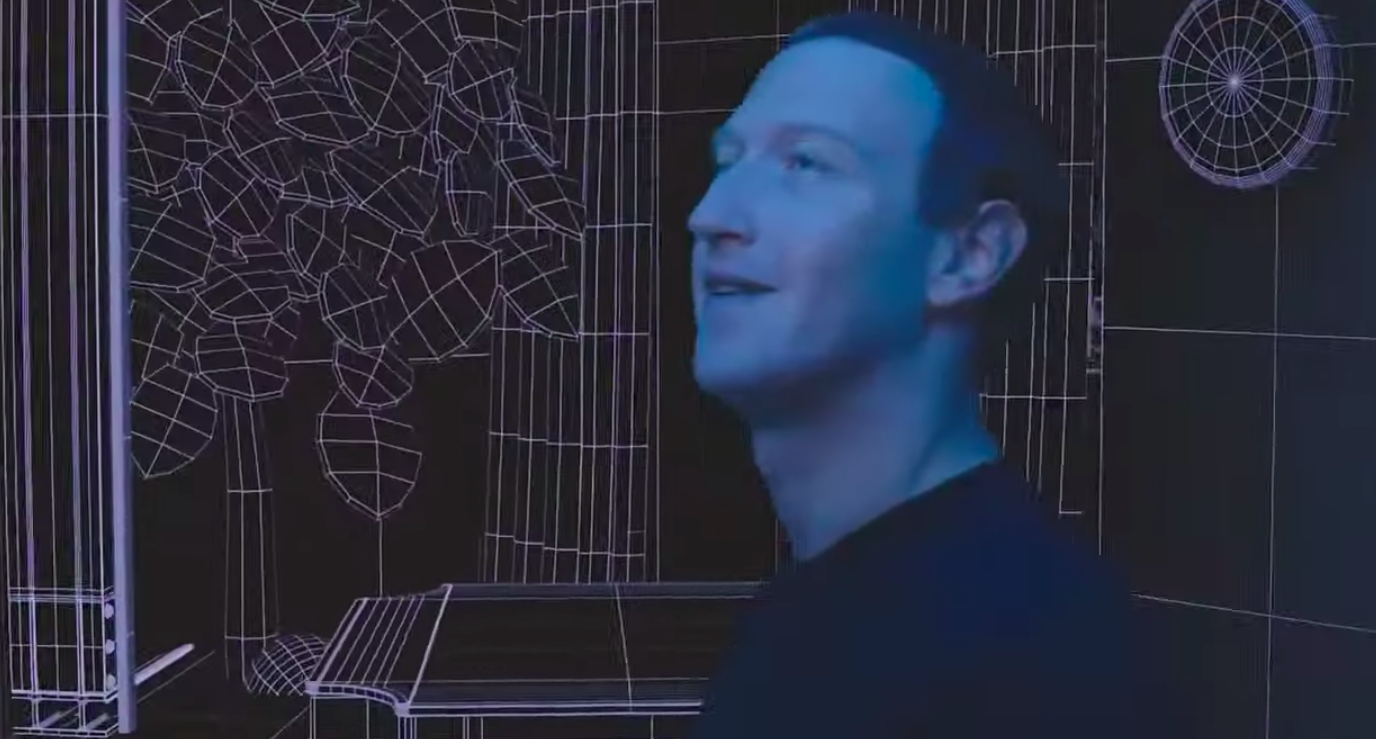
Mark Zuckerberg’s ambitious vision of developing a virtual “metaverse” – and renaming the parent of Facebook, Instagram and WhatsApp “Meta” to match it – has everyone scratching their heads and wondering what it all means.
Zuckerberg announced the rebranding on Thursday, during the company’s hour-long Connect 2021 virtual event, describing it as “the next evolution of social connection.” Though the technologies to make the “metaverse” happen are still in development and may be years off, the name change is effective immediately.
Meta won’t erase Facebook – or Instagram or WhatsApp – but denote the parent company in charge of all three, much as Alphabet is the company that owns Google and YouTube, for example.
There seemed to be some confusion on that account online, however, as people who have been targeting Zuckerberg as an enemy of “our democracy” immediately jumped to the conclusion it was an attempt to hide or change the subject.
“I don’t know if Zuckerberg knows but changing your name doesn’t help avoid legal culpability,” tweeted Zephyr Teachout, a progressive Democrat from New York, adding that Meta was “a perfectly fine name for one of the dozen social networks that will be leftover after the break up.”
Congresswoman Alexandria Ocasio-Cortez (D-New York) said it reminded her of “a cancer to democracy metastasizing into a global surveillance and propaganda machine for boosting authoritarian regimes and destroying civil society… for profit!”
Dan Pfeiffer, former Obama aide and current board member of Good Information Inc, called Zuckerberg’s ideas “embarrassingly stupid” with no one at Facebook daring to tell him so.
Others made fun of the rebrand, and for a while ‘feta’ was trending with memes involving Zuckerberg and the famous Greek cheese. The fast-food chain Wendy’s joked they would change their name to ‘Meat.’
Twitter CEO Jack Dorsey tweeted out a dictionary definition of the term in English, saying that “meta” means “referring to itself or to the conventions of its genre; self-referential.”
His company later added the only META they will recognize is their Machine [Learning], Ethics, Transparency and Accountability team.
Once you get past the memes and mockery, however, Zuckerberg’s presentation revealed an ambitious plan for what he called “embodied internet,” a combination of virtual and augmented reality that will be experienced through motion sensors, smart glasses and technologies that have yet to be invented.
One of the company technicians he spoke with mentioned that the project will require “a dozen major tech breakthroughs” over the coming years. They were already working on things like “photorealistic avatars,” showing a concept video that looks like a deepfakers’ dream come true.
This also quickly drew comparisons to the Matrix, a virtual world from the 1999 sci-fi dystopia.
Others found the notion of a virtual reality fine by itself, but lamented that Facebook is the “wrong company” to run it. Fast Company called it “a vast platform for misinformation and disinformation,” citing as proof the conspiracy theories such as “Russian meddling” in US elections and the claim the January 6 “insurrection” was planned there by “domestic terrorists.”
“I believe that metaverse is the next chapter for the internet,” Zuckerberg argued, saying it would deliver the ultimate promise of technology, “to be together with anyone… teleport anywhere… create and experience anything.”
A future where with just a pair of glasses you’ll be able to step beyond the physical world.
Since founding Facebook in 2004, Zuckerberg has managed to monetize social relationships and create a massive media empire. Thursday’s presentation suggests something far more ambitious: a vision of humanity’s future beyond the constraints of physics, even as the political forces he has himself supported continue to paint a target on his back.
Science & Technology
The Future of Internet Censorship? Comcast Cuts Off User’s Internet Connection For Downloading Torrents
The same censorship/blacklisting regime created to censor torrents from Google search is now used to censor all independent media.

Comcast under CEO Brian Roberts is reportedly now cutting off their users’ internet for allegedly downloading copyright-infringing torrents.
From Torrent Freak, “Comcast Suspends Internet Connection For Downloading Torrents”:
Yesterday, a Comcast subscriber revealed that they had received a special notice from Comcast headed “Action is required” and informing the user that the document is an “alert under our DMCA repeat infringer policy.”
“This alert is to let you know that this month, we again received notifications of alleged copyright infringement associated with your Xfinity account. That means your Internet service may have been used repeatedly to copy or share a movie, show, song, game, or other content without any required permission,” it reads.
Comcast notes that the customer should have received separate emails or letters from Xfinity which provided specific details of these claims under the heading ‘Notice of Action under the Digital Millennium Copyright Act (DMCA)’. These will have contained the specifics of the alleged infringement so with those having been sent, Comcast is taking the next step.
Comcast Suspends Alleged Pirate’s Service
Quite how many notices of alleged infringement were previously received against the subscriber’s account remains unclear. Comcast advises that it had “repeatedly received notifications” of alleged copyright infringement “over the past several months” and as a result, action must now be taken.
“[Y]our Xfinity Internet service has been suspended. This suspension will last for up to 8 hours or until you call us,” the alert reads.

TorrentFreak has contacted the recipient of the alert for additional information, including precisely how many times they had previously received a DMCA notice and whether the temporary suspension caused any hardship. At the time of writing we have yet to receive a response but Comcast indicates that should any additional complaints come in, action against the account will be escalated.
“Your next repeat infringer alert will result in the suspension of your Xfinity Internet service for up to 12 hours. Further notifications may result in your Xfinity Internet account being suspended again or terminated. Your other Xfinity services could be terminated, as well,” the company warns.
[…] Effectively, this is what the entertainment industries broadly hoped to achieve with their abandoned ‘six strikes’ regime but with the addition of punitive measures. That project was shut down in 2017 but subsequent developments, including a $1 billion damages award against ISP Cox, means that ISPs are now effectively forced to take action against repeat infringers.
Cox previously handed out a six-month Internet ban to one of its subscribers for being a repeat infringer, something that had the potential to cause chaos in that individual’s household. That’s something opponents believe should be avoided.
As highlighted by amici curiae briefs in support of Cox’s appeal against the $1 billion damages award it incurred for not dealing appropriately with repeat infringers, such terminations have the potential to disrupt everything from distance learning to telework and telemedicine.
“Sorry, you can no longer go to telework/teleschool or telemeet with your doctor because someone on your shared IP address got a DMCA notice from an automated bot farm run by Disney or Comcast NBC Universal.”
If Comcast is cutting people’s internet off for civil copyright infractions, whose to say they won’t start cutting people off for “hate speech” next?
The same measures the US government used to seize the domains of torrent sites a decade ago are now being used to seize Middle East news websites the Biden regime doesn’t fancy.

The same censorship/blacklisting regime created to censor torrents from Google search is now used to censor all independent media.
Google went from using an AI system to block copyrighted content from YouTube to using their AI system to censor everything the ADL deems “hate speech.”
Everything our overlords do in the name of fighting “copyright infringement” is eventually used to suppress their political opposition.
Cutting off someone’s internet, just like cutting off someone’s power, should be illegal!
Science & Technology
‘Spyware’? Google draws fire for ‘force-installing’ sneaky Covid-tracking app on Android devices in Massachusetts without consent
Google confirmed that the exposure notification system is “built into” device settings and is “automatically distributed” by the Google Play Store so “users don’t have to download a separate app.”
Over the past week, a growing number of Android users in the state of Massachusetts have accused Google of stealth-installing “spyware” on their devices under the guise of a state government-supported Covid contact-tracing app.
Launched by the state on June 15, MassNotify enables users who have turned on the voluntary ‘Covid-19 Exposure Notifications’ feature on their devices’ settings to be alerted via Bluetooth if they have potentially been exposed to the virus.
After enabling the feature, users can choose the state from which they want to receive alerts, and the respective state’s app will be installed on the device. However, dozens of people have claimed that they received the application despite not opting into the feature.
“Automatically installed without consent. It has no icon, no way to open this and see what it even does, which is a huge red flag… I think it’s spyware, phishing as the DPH (Department of Public Health),” user Callie M. noted in a review on the app’s Google Play store page.
Terming it an “unethical breach of privacy and a forceful misappropriation of personal property,” user Frank L. said, “The degree to which my data is collected or distributed through it has not been disclosed neither in active nor inactive form… I can only conclude and caution others that it is disclosing your whereabouts and social contacts without permission.”
The app’s page describes it as being “privacy-focused.” It notes that the DPH takes user “privacy and confidentiality very seriously” and stated that “no GPS or location information” shared from devices will “ever be collected or used” by the app.
In a statement to the 9to5Google news outlet, Google confirmed that the exposure notification system is “built into” device settings and is “automatically distributed” by the Google Play Store so “users don’t have to download a separate app.”
However, the statement noted that the notification functionality was only enabled if a user “proactively turns it on” after deciding to share their health information through the system to warn other people of possible exposure.
Meanwhile, a Hacker News reader was reportedly told by the app’s help desk that the “confusion” was due to an “update made by Google that resulted in some users seeing MassNotify appear in their app list in the Google Play Store.”
Noting that the “appearance of MassNotify in the app list” did not mean that the app was enabled on the reader’s phone, the help desk response claimed that it “merely means that MassNotify has been made available as an option in your phone’s settings if you wish to enable it.”
According to 9to5Google, however, questions remain as to how the app was installed on user devices irrespective of whether Google “accidentally pushed out the application to phones due to a bug in the system.”
If it was an intentional rollout, however, that “raises questions on who authorized that action,” the outlet noted.
In a deluge of one-star reviews on the app’s page, several affected users pointed fingers at the state government since it is supported by the Massachusetts DPH as well as Google, which, together with Apple, developed the technology powering the app.
“Force-installed with no authorization or approval. App is hidden on the device to prevent uninstallation. Government overreach and corporate complicity should never be tolerated,” user Jeramiah added.
The Android version of Google and Apple’s jointly-created “Exposure Notifications System” had previously been in the news for a privacy flaw that allowed other apps installed earlier to potentially see sensitive data.

Join the community.

McMaken: The Fed’s Inflation Is Behind the Supply-Chain Mess

‘White People, You Are The Problem’: AT&T’s Internal ‘Racial Reeducation Program’ Leaked

Matrix? Misdirection? Cringe? Zuckerberg’s presentation of future life in ‘metaverse’ sparks fear, loathing, marvel and mockery

New York facing streets without cops because of COVID vaccine mandate

The Establishment Is Hiding Mass Resistance To Vaccine Mandates With The “Striketober” Farce
